How to Regain Control of Waterhemp in 2026

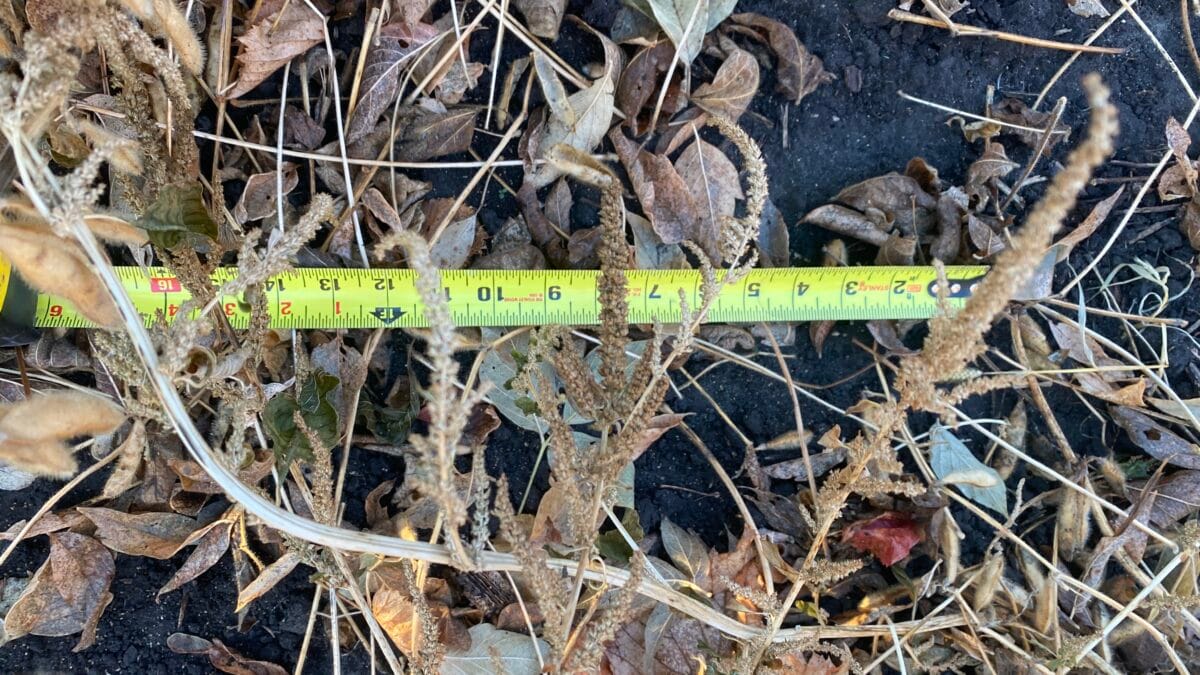
Many farmers did everything they could in 2025 to stay on top of waterhemp, but weather and timing worked against them.
We dealt with sloppy weather, tight spray windows and more late flushes than anyone wanted. On top of that, I saw a lot of Liberty applications go out under conditions where Liberty simply doesn’t shine: cool, cloudy, windy days in the low 60s.
Combine that with heavy weed pressure and limited field access, and it’s no surprise we saw waterhemp survive, regrow and set seed in far too many fields.
How to Pack Your Seedbank (The Wrong Way)
If the goal was to maximize future waterhemp pressure, here’s what 2025 looked like in too many places:
- Spraying Liberty at 62°F, under cloudy and breezy conditions, instead of 80–85°F with full sun
- Relying on post-only programs with little or no residual
- Letting waterhemp get larger than 3 inches before treatment
- Skipping fall or early clean-up with an attitude of “I’ll get it next year”
- Running the combine through weedy patches and spreading seed across the field
Once waterhemp seed reaches the soil, it can remain viable for 4-7 years, making every missed plant a long-term problem.

Herbicide injury without complete kill. Stress alone is not control. Waterhemp that survives a “half-kill” pass often rebounds and contributes to future seedbank pressure.
In very wet areas, some growers were forced to rely on aerial spraying. That can add roughly $20 per acre in application cost as compared to using a ground rig. That’s an expensive backup plan
when the first pass doesn’t deliver good control.
Waterhemp is also built to survive. When it’s stressed, say, half-burned by a poorly timed chemical application, it shifts to survival mode. I’ve seen plants grow from a small piece of root tissue and still produce seeds.
What I Recommend for 2026
1. Start with residuals
Given how much weed seed likely hit the ground this year, I expect heavy early flushes. Strong pre-emerge and layered residual programs will be critical.
We need to keep residual activity in the soil to stop weeds. Group 15 herbicides are the best option. One example is Zidua® SC. Timing matters – this product won’t control emerged weeds. Good soil coverage is also important, which means applying with at least 10 gallons of water per acre.
As with all pre-emerge herbicides, rainfall is needed for activation. Be sure to understand the activation requirements of the product you’re using. For example, Zidua SC requires approximately ½ inch of rain to activate.
For 2026, Liberty® Ultra’s labeled rate has increased from 20 to 34 ounces per acre. Following labeled use rates is critical for both performance and resistance management. The recommended use of AMS with this product hasn’t changed and is critical to ensure best performance.
Where it fits, tillage can also help take out the first flush of weeds.
2. Respect Liberty’s “sweet spot”
Liberty works best when:
✔ Temperatures are 80–85°F or warmer
✔ Sunlight is present
✔ Coverage is adequate
✔ Proper nozzles are used
✔ Droplet size of medium to coarse is best
✔ AMS is added to spray tank
If the weather doesn’t line up, expect reduced control and higher odds of regrowth. Timing matters, and so does an honest assessment about conditions.

A single waterhemp plant left to mature can produce thousands, sometimes approaching a million seeds, turning one missed escape into a long-term seedbank problem.
3. Don’t ignore escapes—especially in seed fields
In production fields, weed control isn’t cosmetic. Escapes affect yield and make cleaning seed harder and more expensive. Seed fields need to be held to a higher standard, and that starts with not letting waterhemp go to seed.
At Peterson, we maintain a very high standard for soybean seed production. We condition all of our seed in-house at our facility in Prosper, N.D. Keeping weed pressure low in production fields helps ensure we’re not moving weed seed from the field into the plant.
4. Think multi-year, not single-pass
One bad year of waterhemp seed can take several seasons of disciplined management to unwind. Every plant you keep from seeding is a win you’ll feel for years.
At Peterson, we focus heavily on keeping production fields clean and encouraging sound weed management—even in tough seasons. We can’t control the weather, but we can control how prepared we are when the next 20-day “seedbank building window” shows up.
How Fast Can Waterhemp Hurt You?
- One surviving plant can produce thousands and possibly a million seeds.
- One bad patch in wheat or soybean stubble can load the seedbank for years.
- A stressed plant that survives a “half-kill” pass is highly motivated to reproduce.
- Waterhemp is resistant to seven different herbicide groups.
- Multiple modes of action are essential.
- Long-term residual herbicides are a foundational management strategy.