Corn Rootworm Control: How to Choose Between Traits and In-Furrow Insecticide

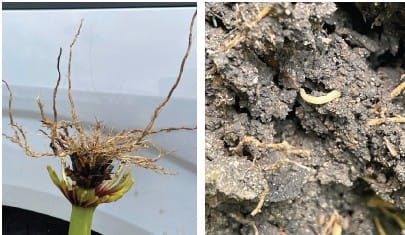
A common question when discussing corn rootworm (CRW) is whether producers should plant traited (i.e., VT4, Smartstax, Stax Pro and others) hybrids or if they can effectively utilize a less-expensive in-furrow insecticide. This can be a difficult question to answer and can differ greatly from farmer to farmer and field to field. Factors that influence the decision include CRW pressure, field history and how predictable that pressure is.
What I’m Seeing in the Field
Across our geography, rootworm pressure isn’t consistent. However, in many areas it’s increasing. Understanding your risk level is critical. If you have questions, the Peterson agronomy team is always willing to talk through it with you.
Traited hybrids offer consistent, built-in protection regardless of your risk level. They simplify planting logistics and are safer to handle. But traits aren’t without challenges.

a) untreated seed / b) treated seed / b) traited seed
Some rootworm resistance has been observed in older trait technologies. Because most of those earlier traits are Bt-based, larvae must feed on the roots to ingest the lethal proteins. Under extremely high rootworm pressure, feeding injury can still occur. In those cases, a combination of insecticide and traited hybrids may be needed.
In-furrow insecticides can provide some protection against early emerging larvae. When pressure is light, they may offer enough control to avoid the added costs of traited hybrids. The per-acre cost difference compared to traited hybrids is the biggest advantage of in-furrow insecticides.
A third option for rootworm protection is seed treatments. Several actives and insecticide load rates are available with benefits being seen with our move to the 500 rate of insecticide. These seed treatments provide protection against above and below ground pests. In cases of extreme rootworm pressure, a combination of seed treatment, in furrow, and a trait may be warranted.

Root feeding was a problem that limited nodal root growth, standability and yield. Warm temperatures led to early emergence of the worms and drought led to slow recovery from injury.
How I Think Through the Decision
When helping a grower choose between traited protection and in-furrow insecticide, I start with a few key questions:
- Does this field have a history of CRW? Is there rootworm trapping information for the area?
- What is the cropping history, past and future, for this field?
- Is the farmer set up to properly handle and apply insecticides?
- What hybrid and trait options are available that fit this environment well?
My Takeaway
There’s no silver bullet for CRW management. The decision often depends on multiple factors, with risk level being the most important. Generally speaking, traited hybrids will be the better option for most situations.
The best advice is to keep monitoring CRW pressure and take appropriate action. Yield losses and harvest challenges can far exceed the cost of effective protection.
Speaking of Hybrid Selection…
Click to check out Peterson’s recommended SmartStax corn hybrids for CRW pressure.