Corn Growth Stages: What Matters, and When It Matters Most

Corn doesn’t develop in a straight line, and neither should your management decisions. From emergence to black layer, each growth stage sets or protects a different yield component. Miss the timing, and you miss the opportunity.
Understanding what matters at each stage helps you prioritize the right decisions: fertility, scouting or protecting yield potential. Here’s a breakdown of key corn growth stages and what to focus on at each step.
 VE (Emergence): Plant as close to 2 inches deep as possible. For every ¼ inch shallower than 2 inches, the plant gives up a set of brace roots. Planting depth should allow emergence in approximately 110–115 GDUs to promote rapid, uniform emergence.
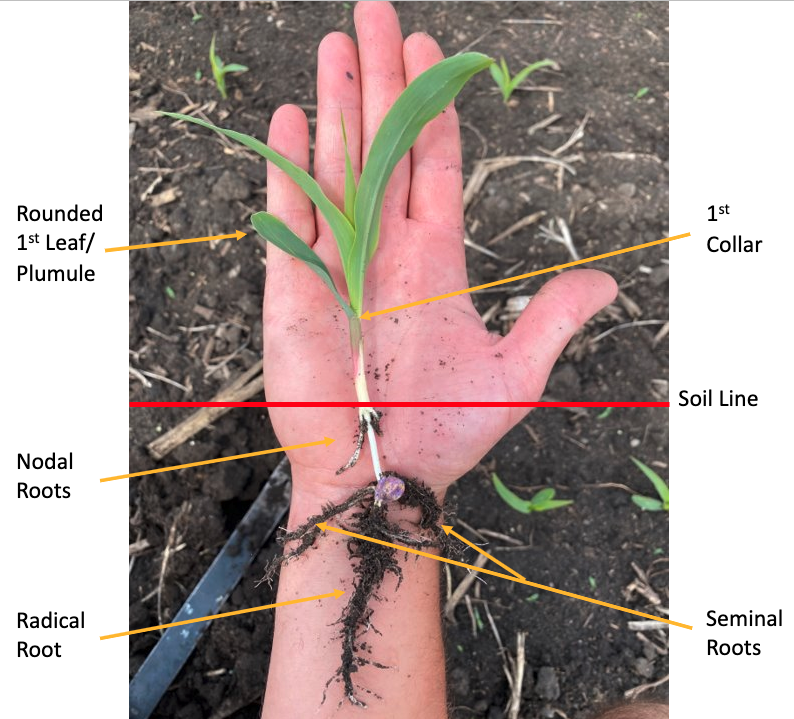 V1 (First Leaf)–V5: Early root development occurs during this period. This is a critical window for early phosphorus availability; consider phosphorus-based starter fertilizers. Weed control is critical at this stage. Scout for early-season insects and diseases.
V6: The number of rows on the ear is determined at this stage. Minimize environmental stress as much as possible. This is critical timing for in-season fertility applications, especially mobile nutrients such as nitrogen.
V10–V14: Crop demand for nutrients and water is greatest during this period. This is a crucial window for disease and insect pressure. Scout for corn rootworm (CRW), European corn borer (ECB), rusts, tar spot and other foliar diseases. Apply insecticides and fungicides as needed. Ear size is determined during this stage.
V14–VT: Continue scouting for disease and insect pressure. Also monitor for root lodging. Brace roots develop rapidly during this period, making it the most critical window for root lodging risk.
VT (Tasseling): The number of kernels is determined. Nutrient requirements are at their peak. This is a good time to apply any final nutrients if needed.
R1 (Silking): Pollen begins shedding from the tassel, and kernel number is determined by successful pollination. Excessive heat, insect pressure or hail can significantly impact yield during this stage.
R2 (Blister)–R4 (Dough): Kernel development occurs during this period. Heat and drought stress can cause kernel abortion, often starting at the ear tip.
 R5 (Dent): Kernel weight is determined during this stage.
R6 (Physiological Maturity): Grain moisture is approximately 32%. Stress at this point will not impact yield.
The right decision at the right stage can make all the difference at harvest.
👉 Connect with your local Peterson team to talk through your fields and in-season management strategy.
Chart Source: Kansas State University Agricultural Experiment Station and Cooperative Extension Service