Corn Rootworm Risk in 2026: What to Watch and How to Respond

Corn lodging from corn rootworm injury, one of the clearest signs of pressure in 2025.
As we head into the 2026 growing season, our 2025 trapping data is already shaping how we think about rootworm risk. Northern corn rootworm made up 98% of what we trapped in 2025, with western corn rootworm showing up only sporadically.
That distinction matters. Northern CRW brings extended diapause risk, which means rotation alone does not always provide protection. Several of the fields with 2025 pressure were rotated acres, not just long-term corn-on-corn.
Where Pressure Was Highest
The biggest hotspots matched what many growers experienced firsthand. Pressure was most consistent along the Highway 81 corridor, around Gwinner, Fergus Falls and Carlisle, and in fields with long-term corn-on-corn histories. High-residue, low-disturbance systems also tended to see higher beetle counts.
In several of these areas, beetle flights peaked late in the season. Late beetles matter. Why? Because more late-season activity indicates more egg-laying, which in turn, increases the likelihood of elevated pressure in those fields the following year. In 2025, the economic threshold for corn rootworm was defined as an average capture rate of 14 or more adults per trap per week. Fields reaching or exceeding that level last year are considered high risk for root feeding in 2026. In many of those cases, I strongly recommend rotating out of corn.
Corn rootworm continues to be one of the most economically damaging insect pests in corn, with annual yield losses and management costs over $1 billion nationwide.
Plans for 2026
In 2026, we’re expanding the trapping program with more traps and more locations, additional agronomy support, and a standardized protocol for trap placement and beetle counts. We’ll also be
monitoring traps weekly and mapping results throughout the season to better identify risk patterns across the footprint.
By expanding coverage, we’ll gain a clearer picture of where pressure is building and where management adjustments are most needed.
What Growers Should Do in 2026
Field history matters. If beetles were trapped in 2025, larvae are likely coming in 2026. Don’t assume rotation eliminates risk, especially in areas with extended diapause.
For a detailed description of the differences between northern and western corn rootworm characteristics, read Chris’s article.
Traits should be matched to pressure, not trends. High-pressure fields justify full trait protection. Moderate-pressure fields may pencil with VT2 plus insecticide, but they still need to be scouted. Digging roots and monitoring beetles both tell different parts of the story, and late-season beetle activity is one of the best indicators of next year’s risk.

Seasonal average corn rootworm beetle counts by trap location. Sites at or above the economic threshold (≥14 beetles/week) signal higher risk for this season.
My Takeaway
The biggest lesson from 2025 was the value of data. Traps changed conversations with growers and dealers. Instead of guessing, we had real numbers.
As we expand this effort in 2026, those conversations will only get better.
Stay Connected During the 2026 Rootworm Season
We’ll be tracking corn rootworm pressure throughout the season and sharing in-season updates through Peterson Field Snapshot, including beetle activity, pressure trends and agronomic considerations.
Sign up to receive timely insights as conditions change.
SIGN UP FOR OUR WEEKLY GROWING-SEASON REPORT
Additional CRW Resources

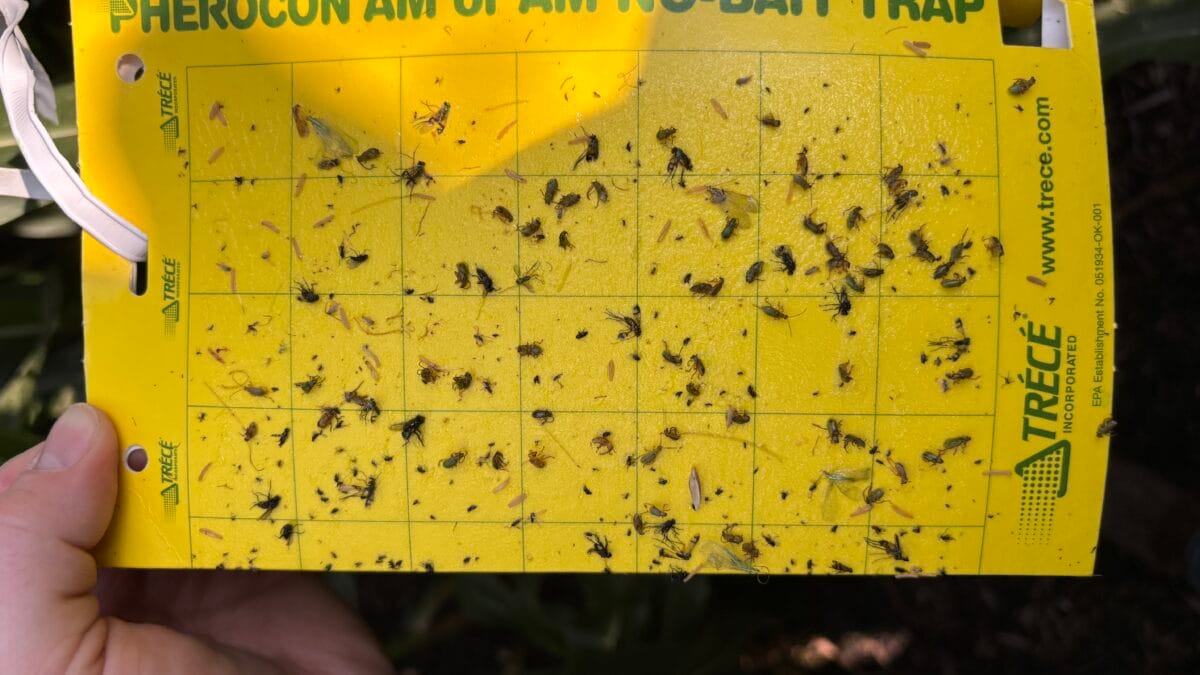
Corn rootworm trap capturing adult beetles during peak flight. Traps help quantify pressure and guide management decisions.
NDSU Extension – Corn Rootworm IPM in ND
- What it’s good for: Practical regional guidance on rotation challenges, extended diapause and scouting.
Iowa State University – CRW Trapping Network
- What it’s good for: Sticky trap setup, weekly count protocols and beetle identification standards.
South Dakota State University – CRW Updates
- What it’s good for: Beetle emergence timing, scouting reminders and regional management insights.
Crop Science US – Conducting Root Digs for CRW
- What it’s good for: Step-by-step guidance on how to properly dig, wash and score corn roots to evaluate rootworm feeding injury.
U of MN Ext. – CRW Scouting & Management
- What it’s good for: Practical, state-specific guidelines on corn rootworm scouting methods (whole-plant counts and sticky traps), thresholds and risk-based management tailored for Minnesota corn production.