When Wind Turns Residue Into a Soybean Problem

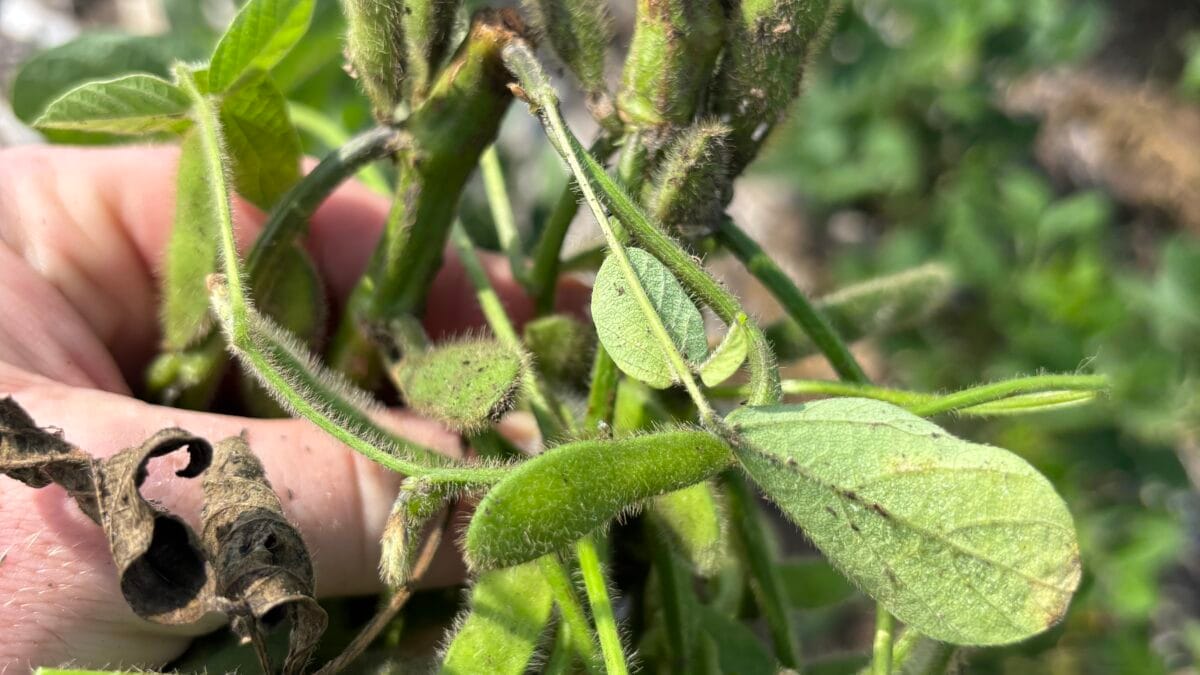
One of the more surprising soybean issues I observed in 2025 wasn’t disease or herbicide injury – it was physical plant damage caused by wind-driven corn residue.
In several no-till fields with heavy residue, early-season storms pushed loose corn stalks and leaves across the soil surface with enough force to bruise young soybean stems. Specifically, these storms produced many tornadoes including an EF5 tornado in eastern ND and derecho-type winds in west central ND.

Stem bruising and lesions at soil surface
The injury typically showed up 1–2 inches above the soil line, right where stems are most vulnerable during VE–V2 growth stages. At that point, soybean tissue is soft and water filled. Once bruised, the stem doesn’t heal. Instead, it creates a permanent weak point that compromises standability for the rest of the season.
What the Damage Looked Like
In affected fields, soybeans often appeared green and healthy at first glance, but closer inspection revealed shiny or scraped stems with horizontal bruising at the soil’s surface.
Over time, injured plants began leaning or falling over, leading to thin, uneven canopy development. The worst injury consistently occurred in residue pockets or in areas exposed to prevailing winds.
In one field, yield dropped to roughly 18 bushels per acre, compared to 45–50 bushels in nearby fields that didn’t experience the same residue movement. That contrast highlights how significantly early physical injury can impact final yield.
To rule out disease, I shared plant samples with NDSU pathology. Their conclusion was clear: this was physical injury from wind and residue – not a pathogen issue.
Why It Showed Up in 2025

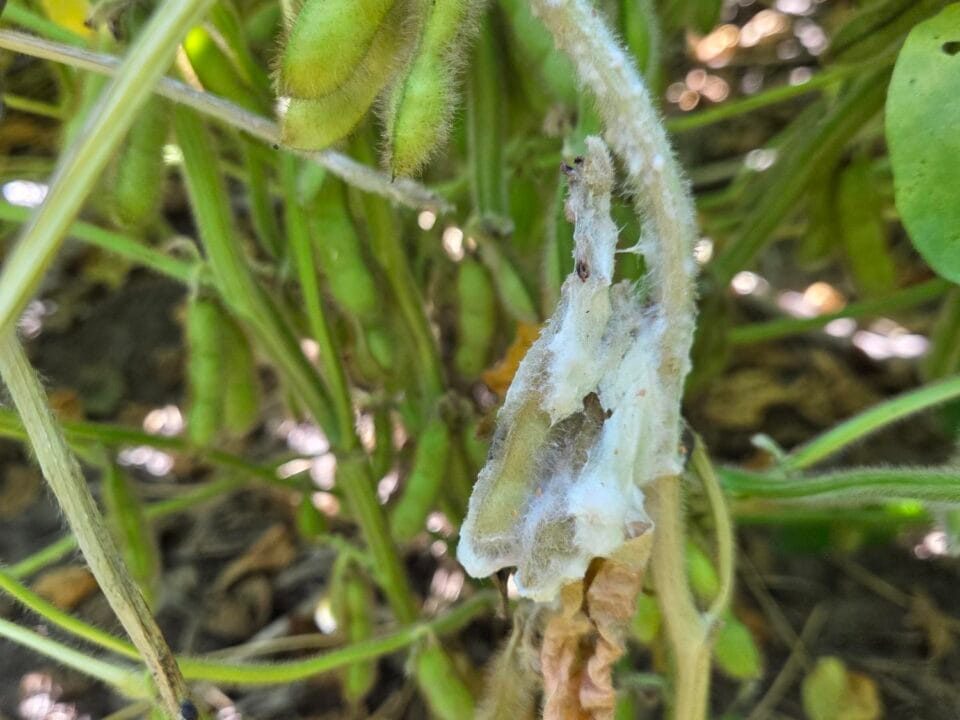
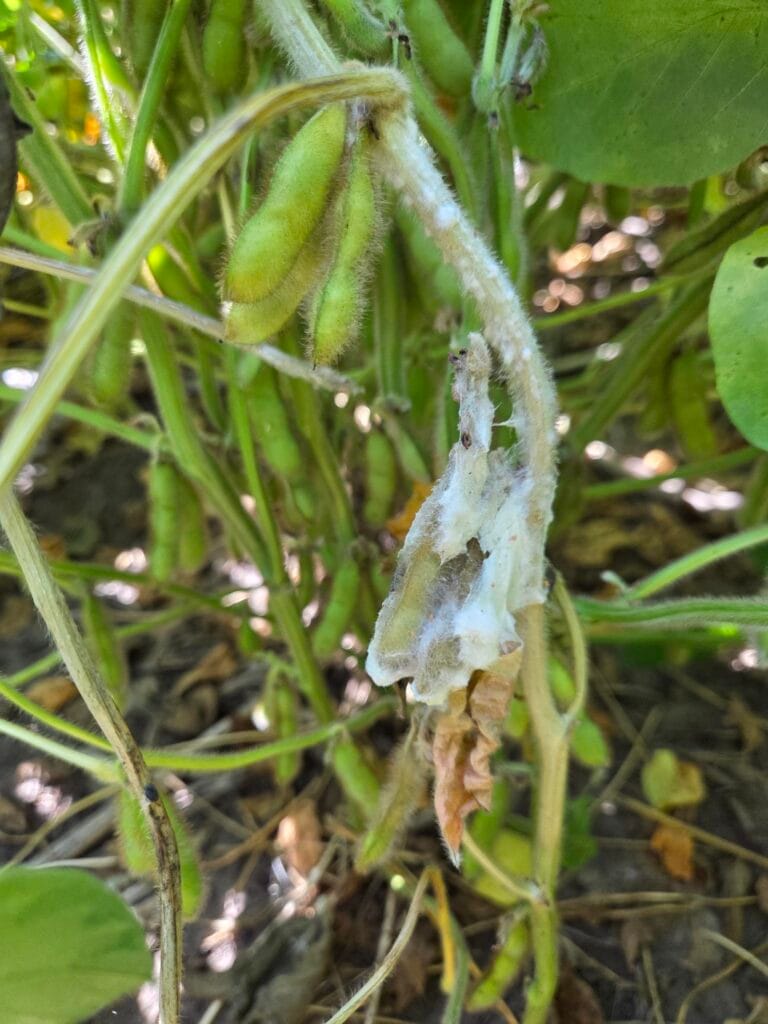
When soybean plants start to fill pods, wind-damaged stems cannot support the weight and break off.
Several factors aligned in 2025. High-yielding 2024 corn left significant residue behind. Dry topsoil allowed that residue to move freely, and strong early-season winds arrived shortly after soybean emergence. In no-till systems where residue wasn’t anchored, those conditions created the perfect setup for stem abrasion.
How Growers Can Prevent This in 2026
- Improve residue distribution during harvest. Avoiding residue piles is the biggest step. Better combine spreading is often enough.
- Anchor residue where possible. Light vertical tillage, strip-till or row cleaners can keep residue from moving.
- Check planting depth. A slightly deeper seed depth helps anchor the hypocotyl when storms hit right after emergence.
- Scout early. This problem is very easy to miss from the road. Checking stems at the soil line is the only way to catch it.
- Plan harvest order accordingly. Fields with early physical injury have a higher likelihood of late-season lodging, so move them up on your harvest priorities.
My Takeaway
This wasn’t a soybean problem—it was a residue problem.
No-till systems work extremely well in our region, but residue has to stay put. When loose residue moves, young, tender soybean stems can’t tolerate that level of abrasion. With better residue distribution, anchoring where needed, and timely scouting, this issue is entirely avoidable.
Use our Find Your Fit tool to match soybean varieties to your ground: https://www.petersonfarmsseed.com/products/soybeans/find-your-fit/