
Soybean Growth Stages 101

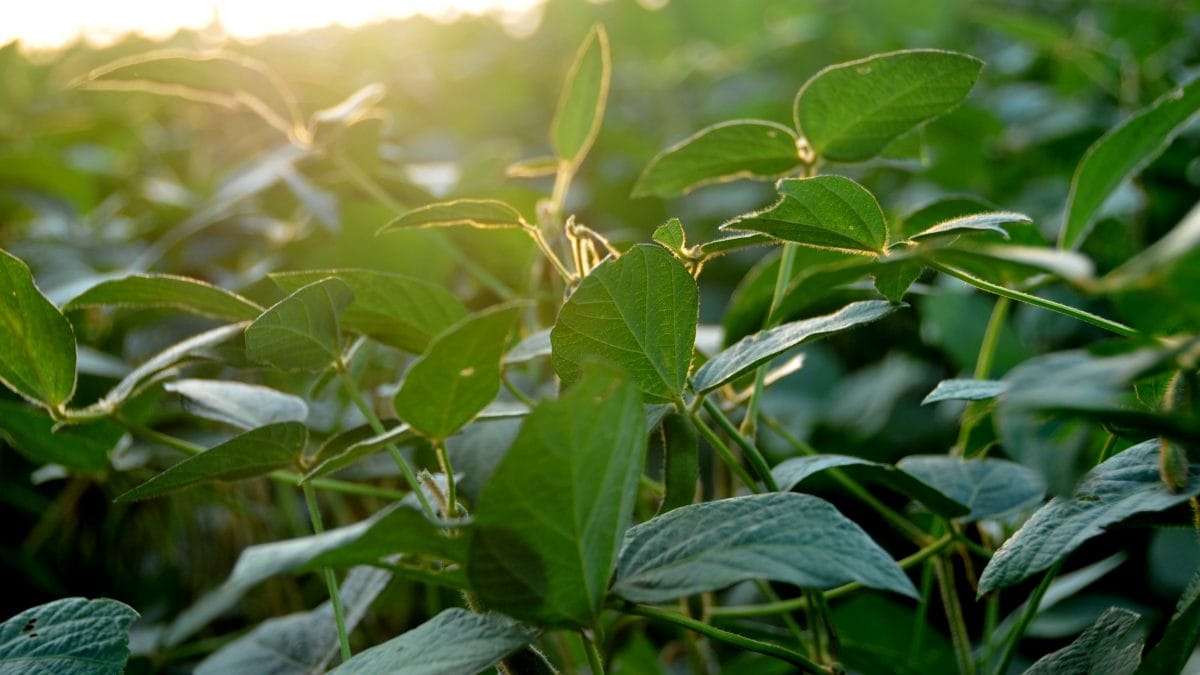
What to Watch, and What It Means for Your Crop
Understanding soybean growth stages is one of the most practical tools growers have for making timely, informed management decisions. From herbicide timing to fungicide applications and stress evaluation, knowing where your crop is at helps protect yield potential throughout the season.
Soybeans don’t move through perfectly clean, separate stages. It’s common to see flowering, podding and seed development happening at the same time on a plant. That’s why accurate staging,, and regular scouting, matters.
Awareness of soybean growth stages is critical for making management decisions to help preserve yield potential. The plant does not follow even, separate, growth stages throughout the growing season, and some pods may just be forming while others have beginning seeds. Determining the plant’s stage will help you make decisions to promote higher yields.
Vegetative Stages (VE–V6)
Establishment and Early Growth
VE (Emergence) –VC (Cotyledon)
Plant seed 1–1.5 inches deep. Scout for emergence issues. Weed control is critical at this stage, especially for species like waterhemp and lambsquarters. Most pre-emerge herbicides need to be applied before emergence.
What to watch:
- Emergence issues
- Soil crusting or compaction
- Early weed pressure
V1 (First Trifoliolate)
Continue scouting for weeds, early diseases and early-season insects. First true leaves appear. The plant becomes largely self-sufficient.
What to watch:
- Early-season diseases
- Insect feeding
- Escaping weeds
V2–V6 (Rapid Vegetative Growth)
Nodulation occurs during this period, and the plant begins fixing its own nitrogen. Rapid vegetative growth takes place. If the growing point is damaged by hail, insects or other physical injury, axillary buds can compensate and continue growth.
What to watch:
- Root development
- Nodulation success
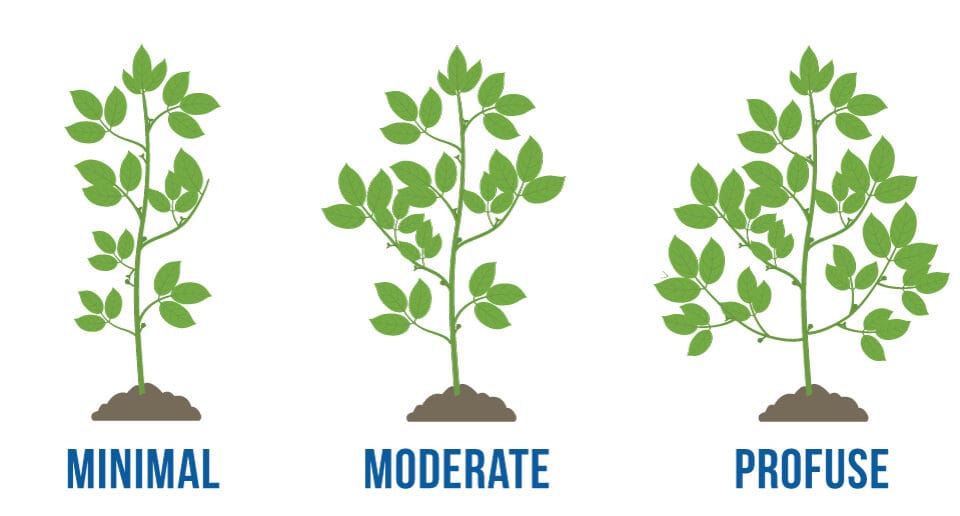
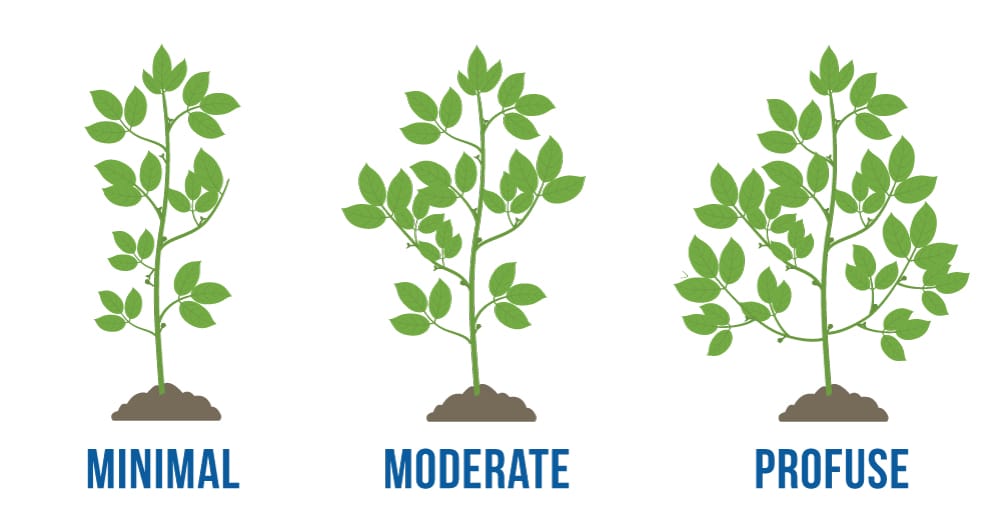
- Plant structure and branching
Reproductive Stages (R1–R8)
Flowering Through Maturity

Example of a Soybean in the Flowering Stage.
R1–R2 (Flowering Stages)
R1 – Beginning Bloom
The first flower opens at any node. Vegetative growth continues. Scout for insects and diseases. This is a good time for fungicide application if white mold risk is high.
R2 – Full Flower
Flowers are present at one of the top two nodes. Plants normally have 8-12 trifoliolates. The plant is rapidly expanding its root system and increases its uptake of N, P & K.
What to watch:
- Disease risk (especially white mold)
- Insect activity
R3–R4 (Pod Development)
R3 – Beginning Pod

Example of Soybean in the Pod Development Stage.
At R3, one of the four uppermost nodes has a pod that is 3/16” in length. Stress can limit the number of pods produced as well as each pod’s beans.
R4 – Full Pod
R4 is reached when one of the four uppermost nodes has a pod that is 3/4″ in length. This is a stage of rapid pod growth on the plant. Many post-emerge chemicals are now off label during pod development. Check labels for growth stage recommendations. This is an important stage for disease diagnosis. Phytophthora, Brown Stem Rot, Sudden Death Syndrome, and Charcoal rot can all be present during pod and seed development. This is also an important time for scouting for Bean Leaf Beetle and Soybean Aphid. Stress during this stage can reduce both pod count and seeds per pod.
What to watch:
- Stress (moisture, heat, disease)
- Pod retention
R5–R6 (Seed Development)

Example of Soybeans in the Seed Development Stage
R5 – Beginning Seed
When a seed measures 1/8” in a pod on one of the four uppermost nodes, the plant is in R5. This typically occurs about a month before full maturity. The plant is near its maximum height and node number. Nitrogen fixation has peaked, and dry matter is being distributed to the seeds. R5 is the last stage where an insecticide application for soybean aphid control is recommended.
R6 – Full Seed
R6 is reached when a pod contains a green seed that fully fills the pod cavity. Root growth is complete at this stage, and the maximum pod weight has been reached.
What to watch:
- Water availability (peak demand)
- Late-season disease
- Insect pressure
R7 – Beginning Maturity

Example of Soybeans in the Plant Maturity Stage
R7 is recognized by one pod anywhere on the plant that is mature in color. The leaves are turning yellow, and the plant will be fully mature in 7-15 days when 95% of pods have reached a mature color (brown or tan).
R8 – Physiological Maturity
Plants have reached full maturity; yield potential is set.
Why Growth Stages Matter
Understanding growth stages helps you:
✔ Time herbicide, fungicide and insecticide applications
✔ Evaluate stress and its likely impact on yield
✔ Avoid unnecessary or off-label applications
✔ Prioritize scouting and management decisions
Growth stage awareness also gives you context.
If stress occurs:
- At V stages → impacts structure and stand
- At R stages → directly impacts yield
Next Step: Match the Right Soybean to Your Fields
Growth stages are one piece of the puzzle. Variety selection and placement matter just as much. Use our Find Your Fit tool to match soybean varieties to your ground: https://www.peterson.ag/products/soybeans/find-your-fit/
For another reference, visit Kansas State University’s Soybean Growth and Development Guide