“Ghost Plants” in Corn? What Crown Rot Is Telling You

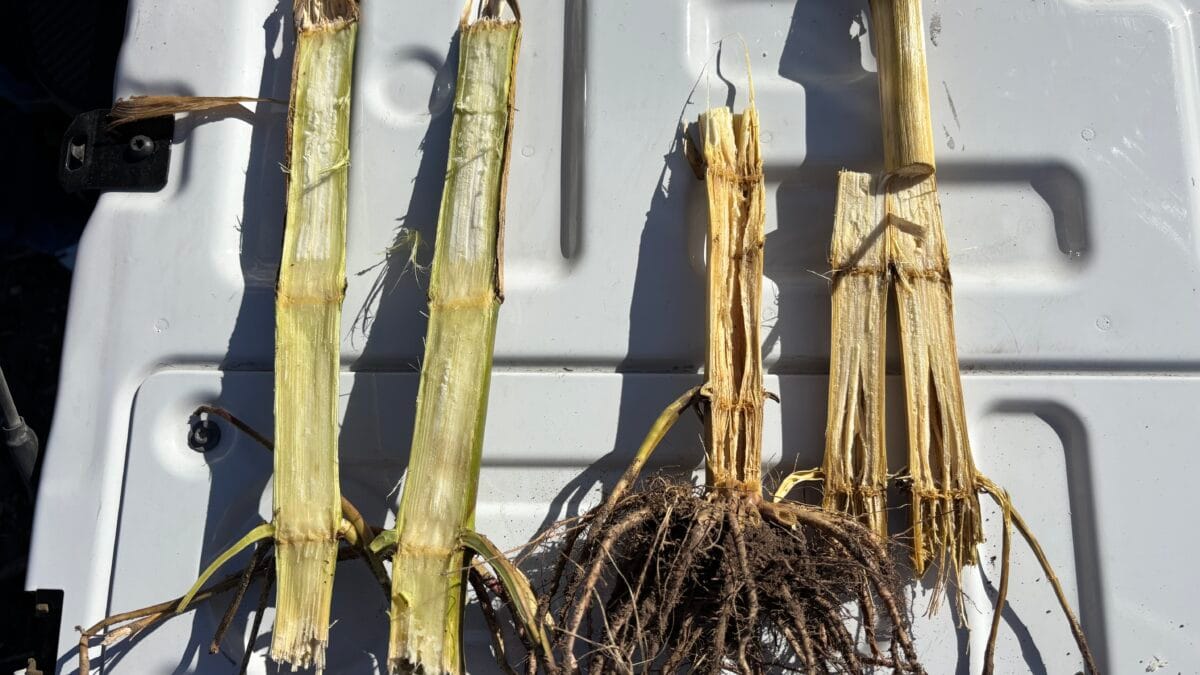
If you walked corn last fall and noticed random “ghost plants,” grayish, dead plants standing right next to green, healthy ones, you were likely looking at crown rot.
Crown rot is a fungal disease. The key to understanding it is to recognize that while infection occurs early in the season during the cool, wet, slow-growth conditions of May/early June, the obvious symptoms often don’t appear until late August or September.
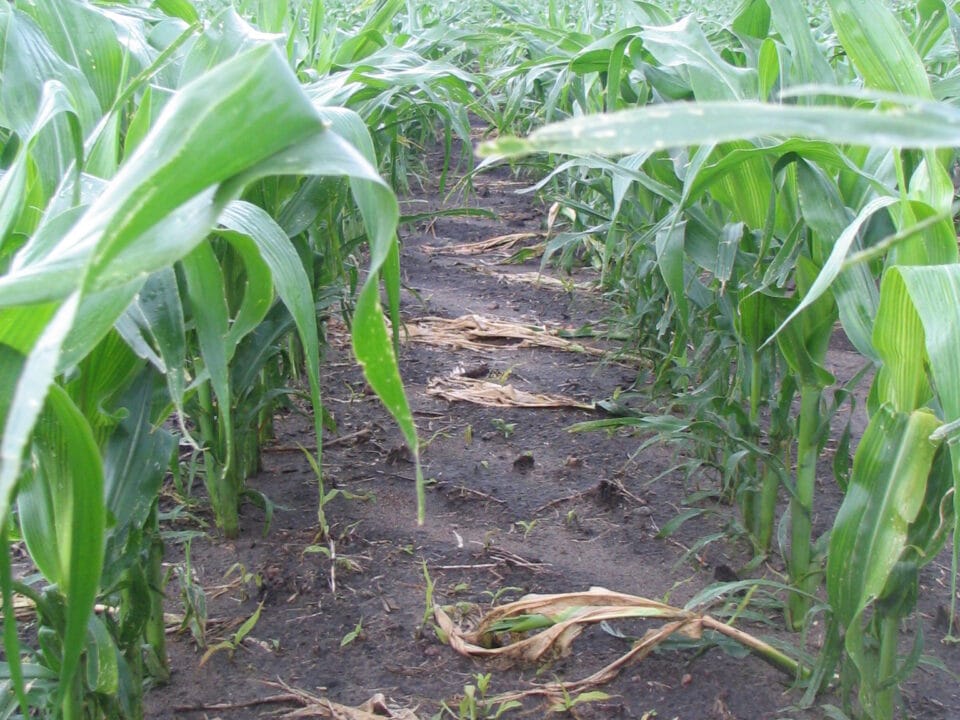
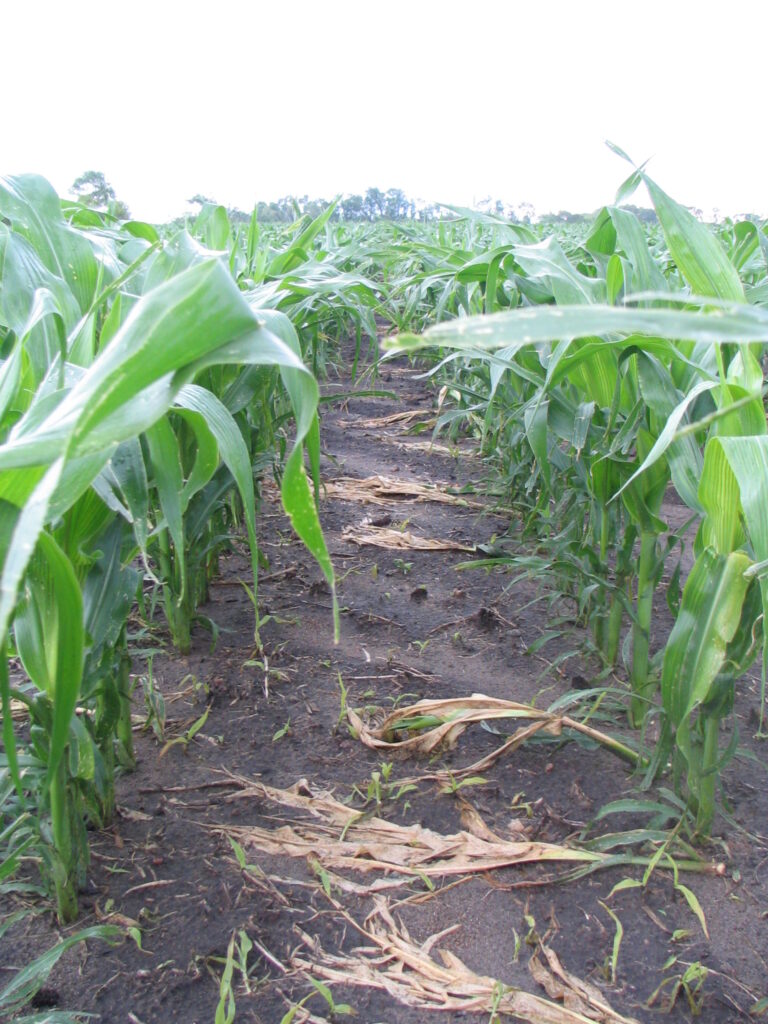
In spring 2025, many cornfields sat yellow and stressed for a couple of weeks. Plants weren’t actively growing; they were stalled in cold, saturated soils. Conditions that favor disease development include heavy soils, poor drainage and high manure application rates. Insect root feeding or physical root injury also can create infection points and increase disease severity.
All said, early-season stress creates the window for crown rot pathogens to move in.
Ghost Plant Checklist

When in doubt, split the stalk. Crown rot damage often hides inside, even when the outside looks normal.
You may be looking at crown rot if:
✔ One plant is gray or tan and dead next to green neighbors
✔ The stalk pinches easily at the base
✔ Splitting the stalk reveals brown, rotted pith near the crown
What I Saw in 2025
In affected fields, crown rot often showed up as pale, dead “ghost plants” scattered throughout otherwise healthy rows. Stalks in these areas pinched easily at the base, and standability declined noticeably as the season progressed into late September and October.
When we dug plants and split stalks lengthwise at the crown, the differences were clear. Healthy plants had green, fibrous pith at the base, while infected plants showed brown, rotted and sometimes slimy tissue in a two-to-three-inch band where the crown and brace roots meet. In many cases, the outside of the stalk looked fairly normal, making the internal breakdown easy to miss without splitting plants.
In one chopped field in Minnesota, it was difficult to find truly healthy crowns. In other fields, crown rot was present even though yields were still excellent. That variability is important. Yield loss isn’t guaranteed, but reduced standability and harvestability are consistent risks.
What Growers Can Do
- Know when it starts. Crown rot infections occur during cool, wet early-season conditions – not in September. If we experience another spring like 2025, expect crown rot to show up again in early fall. While visible symptoms appear much later, the infection itself occurs early and sets the stage for more severe disease throughout the growing season. One management goal is to delay the timing of infection to reduce overall disease severity. Seed treatments can help delay the infection window, reducing severity when early infection occurs. Fusarium species are among the most difficult pathogens to manage, which is why stacking multiple modes of action is important to provide broader-spectrum protection against the range of fusarium present in our region.
- Scout late-season standability. From late August into September, watch for ghost plants, use a simple push test and pinch stalks near the crown. Plants that tip easily or collapse at the base are a red flag.
- Adjust harvest order. Fields showing crown rot should be moved up on your harvest priority list. The goal is straightforward: get more ears into the combine and fewer on the ground.
- Don’t panic about next year. Crown rot is highly weather dependent. A field planted to corn again following a warm, dry start may show little to no issue. Having crown rot one year does not guarantee it will return the next.
- Keep the hybrid conversation going. We’re still learning which hybrids handle crown rot stress best. Universities such as NDSU are beginning to focus more on this disease, and we’ll continue to incorporate those findings into product discussions at Peterson.
Crown rot in 2025 was a reminder that many “fall problems” begin much earlier, often in May, though infection can occur throughout the growing season. Understanding when and why it starts helps us scout more effectively and manage harvest more efficiently.
Simple Field Tests
Push Test: Push plants 8–10 inches from vertical.
✔ Healthy: spring back upright
✔ Crown rot: tip over and remain down
Pinch Test: Squeeze the stalk near the crown.
✔ Healthy: firm and resists pressure
✔ Crown rot: soft, mushy, collapses easily